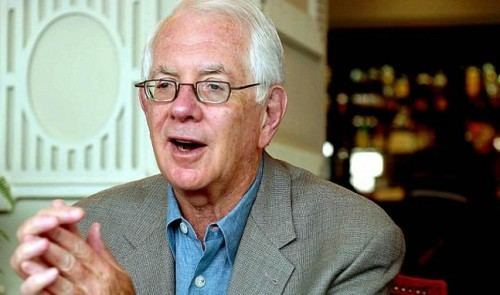
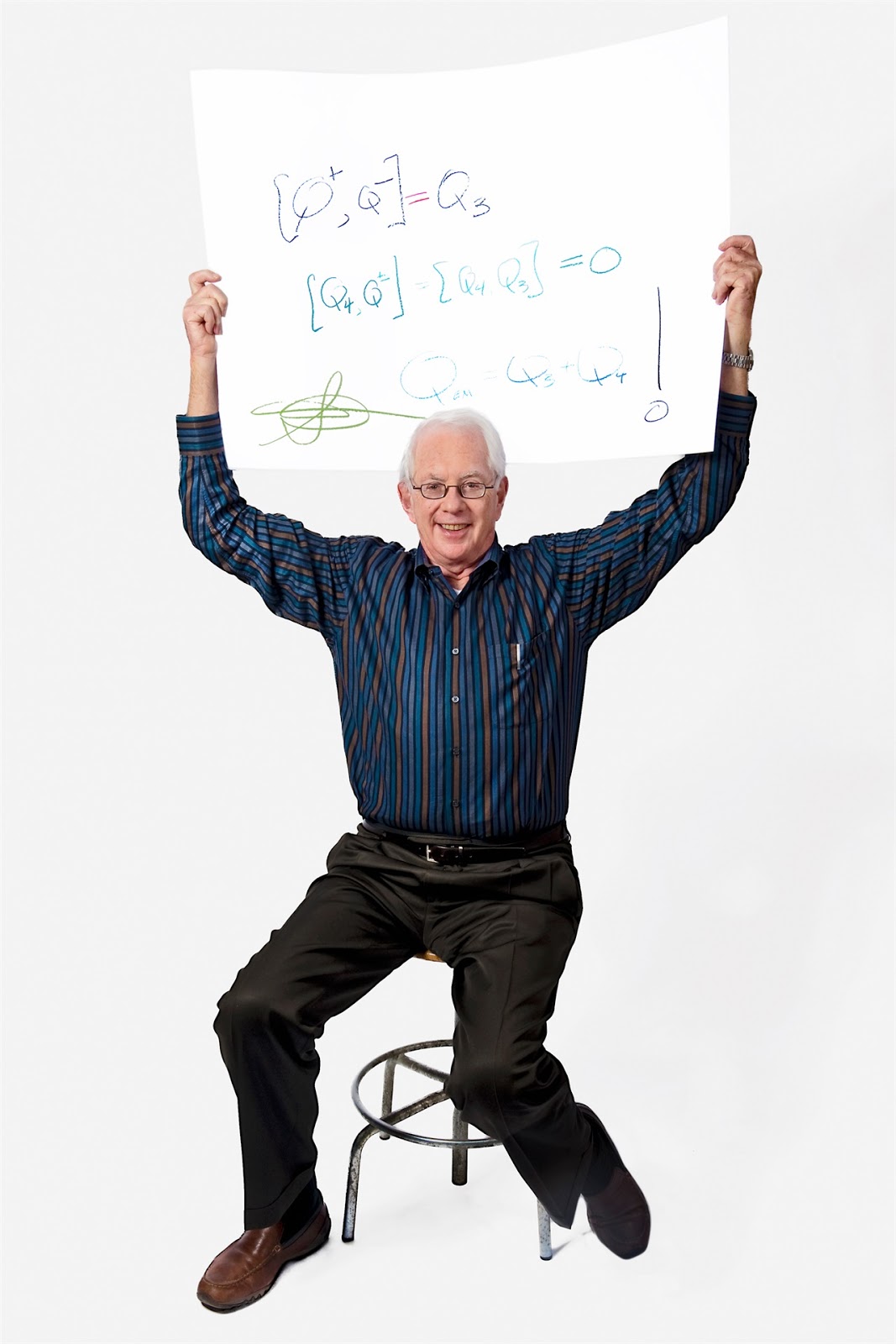
Sheldon Lee Glashow (Nueva York, 5 de diciembre de 1932) es un físico estadounidense. Fue profesor del departamento de física de la Universidad de Harvard y después en la Universidad de Boston.
Junto con Steven Weinberg y Abdus Salam, desarrolló la teoría electrodébil, por la que ganó con ellos el Premio Nobel de Física en 1979.
Glashow es un notable escéptico de la teoría de supercuerdas debido a su falta de predicciones mediante experimentos verificables. Su abandono de Harvard ha sido relacionado con el apoyo del departamento de física de la universidad a la teoría de cuerdas. Antes de esto hizo campaña para expulsar a los teóricos de cuerdas fuera de Harvard.
Bibliografía
- The charm of physics (1991) ISBN 0-88318-708-6
- From alchemy to quarks : the study of physics as a liberal art (1994) ISBN 0-534-16656-3
- Interactions : a journey through the mind of a particle physicist and the matter of this world (1988) ISBN 0-446-51315-6
- First workshop on grand unification : New England Center, University of New Hampshire, April 10-12, 1980 edited with Paul H. Frampton and Asim Yildiz (1980) ISBN 0-915692-31-7
- Third Workshop on Grand Unification, University of North Carolina, Chapel Hill, April 15-17, 1982 edited with Paul H. Frampton and Hendrik van Dam (1982) ISBN 3-7643-3105-4
Enlaces externos
- Sheldon Lee Glashow
- Interview with Glashow on Superstrings
- Contributions to the theory of the unified weak and electromagnetic interaction between elementary particles, including inter alia the prediction of the weak neutral current.
- Mi descubrimiento favorito no es el del Nobel, sino el del quark charm en El País